We buy everything we review ourselves — brands don't send us freebies or influence our opinions.
When you shop through our links, we may earn a commission at no extra cost to you. That's what keeps SRVogue honest and running.
How to Use an Air Fryer for Beginners — Tips, Settings and First Recipes

There is something a little intimidating about an air fryer the first time you take it out of the box. It sits on your counter looking like a small appliance from the future, and suddenly every crispy chip and golden chicken wing you watched someone make on YouTube feels oddly far away. You know how to use an air fryer for beginners is supposed to be simple — everyone says so — but standing in front of it for the first time, that’s not quite how it feels.
I know that feeling well. I picked up my first compact model a few years ago — specifically because I was only cooking for myself and occasionally one other person — and I genuinely left it on the counter untouched for nearly four days after unboxing it. Not because I didn’t want to use it. Just because I wasn’t quite sure where to start.
That changed the first time I actually committed to using it properly. Since then, it’s been one of the most consistently useful things in my kitchen. If you’re just starting out and want a plain, no-fuss guide to getting going — this is that guide.
Why Air Fryers Make So Much Sense for Small Kitchens and Small Families
An air fryer is, at its core, a compact convection oven. It works by using a powerful heating element and a high-speed fan to circulate very hot air around your food, which is what creates that crispy exterior you’d normally associate with deep frying — but with very little or no added oil. The results are genuinely impressive once you understand how the process works, and in most everyday situations, the food comes out better than it would from a standard oven.
Part of the reason an air fryer for small spaces works so well is purely practical. A full-size oven takes eight to ten minutes to preheat properly, uses a lot of electricity for one or two portions, and heats up the whole kitchen in warmer months. A compact air fryer reaches cooking temperature in two to three minutes, draws far less power, and takes up about as much counter space as a kettle. For a small family or a household of two, that trade-off makes enormous sense.
That’s also why, if you’re shopping for your first one, I’d encourage you to resist the pull of the largest model you can find. A 2 to 3-quart air fryer for a small family of two handles most everyday cooking tasks without the bulk or the wasted capacity that comes with an oversized machine.
How to Use an Air Fryer for Beginners — The Actual Basics
Forget the forty-page manual for now. These are the things that genuinely matter in your first couple of weeks.
Preheat it, even if the instructions say you don’t have to. Technically, food will cook without preheating. In practice, giving it two to three minutes at your target temperature makes a real difference to how evenly things cook and how crispy the outside gets. Build the habit early.
Never overcrowd the basket. This is the single most common beginner mistake, and the one that causes the most frustration. Air fryers work by pushing hot air around your food. Stack things too deep and the air can’t reach the surfaces — you end up with uneven results, steamed on one side and overcooked on another. Single layer, always. If you have more food than fits, run two short batches.
Shake or flip halfway through cooking. For most things — chips, vegetables, nuggets, anything small — a shake at the halfway point exposes the other side to the heat and gives you much more consistent colour and texture. It takes five seconds and the difference is noticeable.
Pat wet food dry before it goes in. Moisture is the enemy of a good crisp. If you’re cooking chicken that’s been sitting in a marinade, or fish that’s been rinsed, pat it firmly dry with kitchen paper first. You’ll see immediately why this matters.
Temperature guidance to start: 180°C / 350°F for most everyday cooking. 200°C / 400°F when you want maximum crispiness — think chips, skin-on chicken, frozen foods. Start conservative and add a few minutes if needed. It’s much easier to add time than to undo overcooking.
Understanding Your Air Fryer Settings Without Overcomplicating It
If your model has preset buttons — Fries, Chicken, Fish, Bake, Reheat — treat them as starting points rather than gospel. Manufacturers calibrate them differently and every piece of food varies. Use the presets to get you into the right temperature and time range, then trust your eyes and nose over the timer.
If you have a simpler manual model with just a temperature dial and a timer, don’t see that as a limitation. In my experience, manual controls are actually easier to get confident with because you’re making the decisions rather than deferring to a preset that may or may not match what you’re actually cooking. Set temperature, set time, check halfway, adjust. That’s the whole process.
The setting worth paying particular attention to early on is reheat. Reheating leftovers in an air fryer is one of the best things you can do with it — cold pizza, leftover roast chicken, yesterday’s chips — everything comes back properly rather than going rubbery and sad like it would in a microwave. If one thing convinces you the air fryer was worth buying, it’s usually this.
The Best Small Air Fryer for Beginners — A Compact Pick That Actually Makes Sense
There is no shortage of air fryers to choose from, which is part of what makes the whole category confusing when you’re just starting out. But if you are new to air frying and cooking for one or two people in a smaller kitchen, you genuinely don’t need the biggest, most feature-heavy model on the market. What you need is something compact, reliable, easy to clean, and simple enough to get going without a long learning curve.
After spending time going through what real buyers consistently recommend — across multiple platforms, not just curated review sites — one model kept coming up: the Multifunctional electrical Air Fryer.
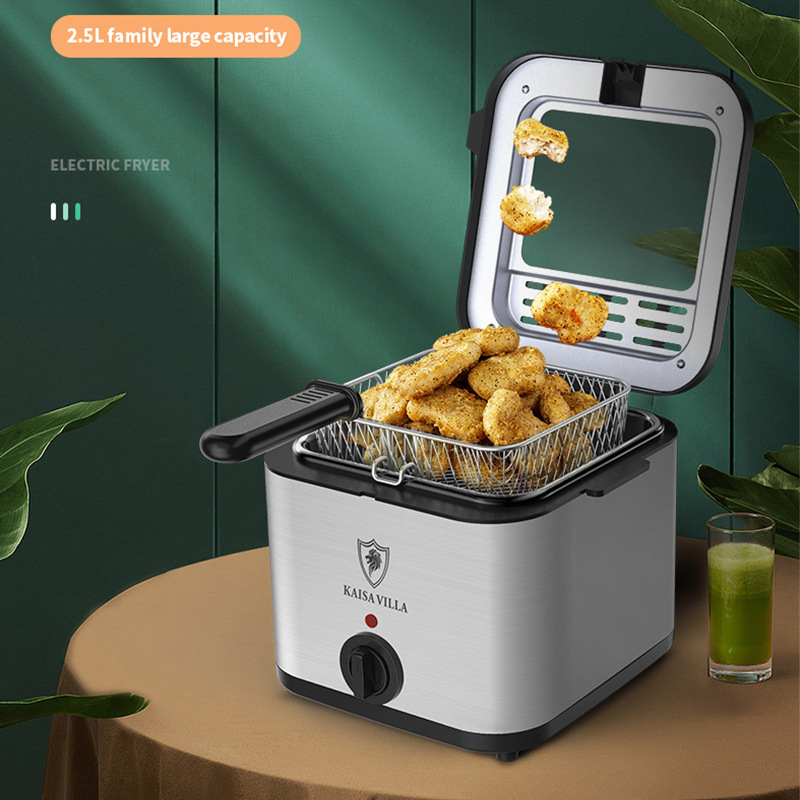
It’s a square-basket compact model, which means it sits tidily in a smaller kitchen without dominating the counter. The capacity is sized right for one or two portions — which makes it one of the most sensible picks if you’re looking for the best small air fryer for two. The interface is minimal: temperature control, timer, that’s it. No confusing preset menus to navigate when you’re still finding your feet.
What stands out in the reviews isn’t any single feature — it’s how consistently it performs over time. Buyers talk about using it almost daily for six months to a year without issues. A friend of mine who picked one up as her first air fryer specifically because she wanted something for a small family of two said she was surprised by how little fuss it turned out to be. She was also the one who told me the basket cleanup was much easier than she expected — non-stick, dishwasher safe, and the exterior stays cool to the touch while it’s running.
If you’re looking for the best small air fryer for two people and want something that will still be working reliably a year from now — this is the one I’d point you toward.
Multifuncationsl Electrical Air Fryer — Compact Beginner-Friendly Model
88
OVERALL SCORE
EASE OF USE
9.5
COOKING PERFORMANCE
8.5
BUILD QUALITY
8.5
SIZE FOR SMALL SPACES
9.5
VALUE FOR MONEY
8.0
Compact, genuinely easy to use from day one, and built to last — this is the model I’d recommend to anyone who asks me where to start with air frying, particularly if you’re cooking for a smaller household.
Your First Five Recipes — Start Here
The fastest way to build confidence with a new appliance is to cook things you already know and compare the results. These five are the ones I’d start with.
1. Frozen chips or fries. This is the air fryer gateway recipe for a reason. 200°C, 18–20 minutes, shake halfway. They’ll come out crispier than an oven and faster than you expect. This single recipe is usually what makes people immediately glad they bought one.
2. Skin-on chicken thighs. Pat dry, season generously, 190°C for 24–26 minutes. The skin crisps properly in a way that’s difficult to replicate in a standard oven without extra effort. This is usually the recipe that converts people from occasional users to daily ones.
3. Roasted vegetables. Even pieces, a small drizzle of oil, salt, and your preferred seasoning. 190°C for 14–16 minutes, shake halfway. They come out nicely caramelised with edges that hold — not watery or soft like roasting in a pan too full of moisture.
4. Leftover pizza. 160°C for 4–5 minutes. The base crisps back up properly, the cheese melts correctly, and you will never microwave cold pizza again after you’ve done this once.
5. A simple egg in a ramekin. Crack one egg into a small buttered ramekin. 160°C for 8–10 minutes depending on how set you want the yolk. It’s a surprisingly good result for very little effort and it helps you get used to working at lower temperatures.
Mistakes Worth Knowing About Before You Get Too Far In
Wet batter doesn’t work. Classic beer batter or tempura batter will drip through the basket and burn before your food finishes cooking. Use breadcrumbed coatings instead — panko or standard fine breadcrumbs work brilliantly in an air fryer and give you a better crust than wet batter does anyway.
Very light foods get lifted by the fan. The fan is powerful. A single thin sheet of pastry or a very light piece of flatbread can get blown up into the heating element. Weigh it down lightly or use a small rack.
Clean the basket regularly. Non-stick coatings hold onto grease faster than you’d expect, especially after cooking fatty foods like sausages or skin-on chicken. A quick rinse after every use and a proper wash every couple of days keeps things smelling clean and stops old grease from burning and adding bitter flavours to whatever you cook next.
It’s not the right tool for everything. Soups, braises, wet batters, large whole joints of meat — these are either impractical or produce inferior results compared to proper cooking methods. Use it for what it’s genuinely good at and it will never disappoint.
Final Thoughts on How to Use an Air Fryer for Beginners
Getting comfortable with how to use an air fryer for beginners really does come down to a small number of habits that click into place within the first week or two: don’t overcrowd, shake halfway, pat food dry, and preheat. Everything else is just practice.
If you’re cooking for a small household — one, two, maybe three people — a compact model is genuinely all you need to start. The air fryer for small spaces case is real: you get all the benefits without the bulk. Once it clicks, and it clicks fairly quickly, it becomes one of those things you wonder how your kitchen managed without it.
Start with frozen chips. Everything after that takes care of itself.
Affiliate disclosure: This article contains affiliate links. We may earn a small commission if you purchase through these links, at no extra cost to you. All recommendations are based on genuine buyer feedback and honest personal research.