We buy everything we review ourselves — brands don't send us freebies or influence our opinions.
When you shop through our links, we may earn a commission at no extra cost to you. That's what keeps SRVogue honest and running.
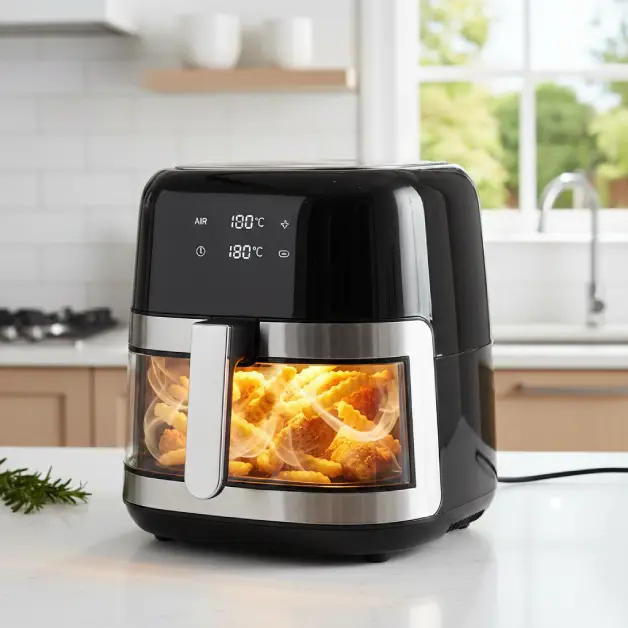
The Electric Air Fryer Revolution: My Honest Experience After Months of Daily Cooking

I resisted buying an electric air fryer for longer than I care to admit. Every time someone mentioned theirs I nodded politely while privately thinking it was just another kitchen gadget that would end up in a cupboard after three uses. My kitchen is not large and I am protective of counter space. An appliance needed to genuinely earn its place before I’d commit.
It has now been several months and my electric air fryer has not moved from its spot on the counter once. Here is everything I have learned from actually using one daily rather than just reading about them.
What an Electric Air Fryer Actually Is — And What It Isn’t
Before getting into my experience, it is worth being clear about what an electric air fryer does because the name is slightly misleading. It is not a fryer in the traditional sense — there is no vat of oil involved. What it actually is, is a compact and powerful convection oven with a heating element and a fan designed to circulate superheated air around your food at high speed.
That rapid air circulation is what creates the crispy exterior. The hot air hits every surface of the food simultaneously, pulling moisture out of the outer layer and creating the same kind of crunch that deep-frying produces — but with a fraction of the oil and none of the mess. Think of an electric air fryer as a conventional oven that has been redesigned specifically to mimic the texture and result of deep-fried food, scaled down to countertop size, and made to work in half the time.
Once I understood that, I stopped expecting it to taste exactly like chip-shop chips and started appreciating it for what it genuinely does brilliantly.
The Health Benefits — And Being Honest About Them
The headline health claim for any electric air fryer is reduced fat content. Traditional deep frying requires several cups of oil and the food absorbs a significant amount of that oil during cooking. Air frying typically needs a tablespoon at most — sometimes just a light spray — and the food doesn’t sit in oil at all. The reduction in fat content compared to deep frying can be as much as 80% depending on the food and the cooking method being compared.
For our household, where we were eating fried chicken, chips, and similar foods regularly, switching to the electric air fryer made a noticeable difference. The food tastes indulgent. It has the crunch and the satisfying texture of fried food. But it isn’t sitting in a pool of absorbed oil when it comes out, and that change over the course of weeks and months adds up in ways that matter. Read our honest review abou Stainless Steel Double Heating Air Oven.
I won’t pretend air-fried food is identical to deep-fried food — anyone who tells you that is exaggerating. But it is genuinely close enough that for everyday cooking, the trade-off is completely worth it. For special occasions when you want the real thing, you still have that option. For a Tuesday night dinner when you want crispy chicken without the guilt, the electric air fryer handles it beautifully.
What I Cook In Mine — Because Versatility Is the Real Selling Point
When I first bought an electric air fryer I expected to use it mainly for chips and chicken. What I didn’t expect was how much I’d end up using it for everything else.
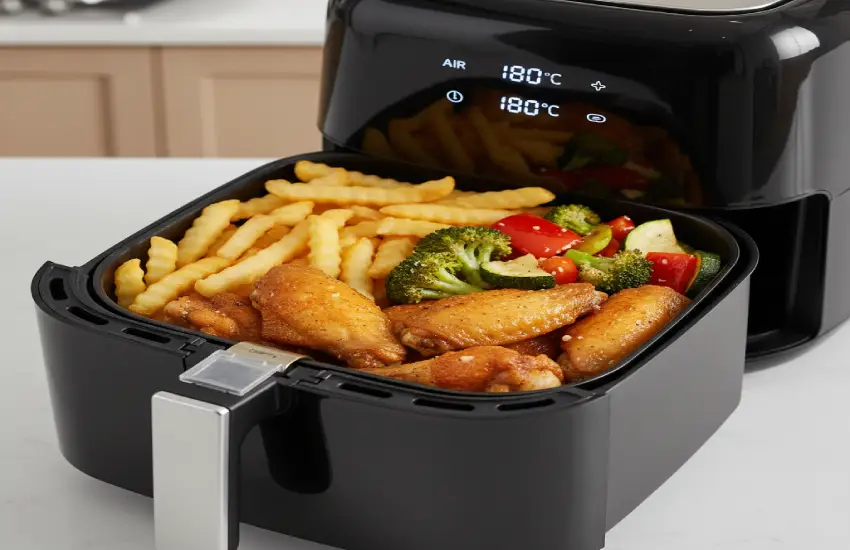
Roasted vegetables came out better than they ever did in my oven — caramelised edges, tender centers, done in half the time. Brussels sprouts that I’d previously only tolerated became something I actively looked forward to eating. Salmon fillets cooked perfectly in twelve minutes with a beautifully flaked texture. Chicken breasts stayed juicy inside while developing a proper golden exterior that the oven never quite managed without drying the meat out.
The frozen food performance genuinely surprised me. Frozen chips, chicken nuggets, spring rolls, fish fingers — everything that used to come out of the oven slightly soft and disappointing comes out of the electric air fryer properly crispy, in less time, without heating up the entire kitchen. For anyone with children who eat a lot of frozen foods, this alone justifies the purchase.
I’ve baked muffins in it. I’ve made cookies. I’ve reheated pizza and had it come back to life with a crispy base rather than the soggy microwave result. I’ve used it to reheat fried chicken the following day and had it taste almost as good as the day before — which anyone who has tried reheating fried chicken in a microwave knows is essentially impossible any other way.
Speed and Energy — The Practical Numbers
Something I underestimated before buying an electric air fryer was how much the speed difference would actually matter in daily life. A conventional oven needs preheating — ten to fifteen minutes before you can even put food in. An electric air fryer reaches temperature in two to three minutes and starts cooking immediately.
A portion of chicken that takes twenty-five minutes in the oven takes twelve to fifteen in the air fryer. Chips that need thirty minutes in the oven are done in eighteen. Over the course of a week of regular cooking, that time saving adds up to something genuinely significant for a busy household.
The energy efficiency argument is also real. Running a full-size oven for a small portion of food is wasteful. An electric air fryer uses considerably less electricity for the same result — and in summer months, not heating up a large oven means the kitchen stays cooler and more comfortable, which is a quality-of-life improvement I hadn’t anticipated before experiencing it.
How Easy It Is to Use and Clean — Genuinely
I was worried about learning curves. There weren’t any. My electric air fryer has a digital display with preset programs for the most common foods. I select chicken, adjust the time slightly based on portion size, press start, and walk away. The appliance beeps when it’s done. That is the full extent of the complexity involved for most everyday cooking.
The cleanup situation compared to traditional frying is almost laughable in how much better it is. No vat of used oil. No oil splattered across the hob and surrounding surfaces. No smell lingering in the kitchen for hours. The basket takes about two minutes to wash by hand or goes straight in the dishwasher. The exterior wipes clean with a damp cloth. I went from dreading post-frying cleanup to not thinking about it at all.

What to Look For When Buying an Electric Air Fryer
Having used mine extensively, here is what I would actually focus on if I were buying again:
Capacity — This is the most important decision. A 2 to 3 quart electric air fryer works for one or two people cooking small portions. For a family of four or anyone who cooks in larger batches, 5 quarts or above is where you want to be. Cooking in multiple small batches defeats the time-saving purpose. Buy bigger than you think you need.
Temperature range and wattage — Look for a model that reaches at least 200°C (400°F) and runs at 1400 to 1800 watts. Lower wattage models take longer and don’t achieve the same crispiness. The higher end of that wattage range is worth it.
Digital controls and presets — Not essential but genuinely useful in practice. Preset programs for common foods take the guesswork out of cooking times and temperatures while you’re learning the appliance.
Dishwasher-safe basket — Non-negotiable for me. Being able to put the basket in the dishwasher rather than hand-washing every time makes daily use sustainable long-term.
Tips I’ve Learned That Make a Real Difference
Do not overcrowd the basket. This is the single most common mistake and it directly undermines the whole point of the appliance. The hot air needs to circulate around every surface of the food. A crowded basket steams the food instead of crisping it. Cook in a single layer, even if it means two batches — the results are dramatically better.
A light spray of oil on the food before cooking makes a visible difference to the colour and crispiness of the finished result, even on foods you’d think need no oil at all. It doesn’t take much — a two-second spray is enough. We have a vareity of Kitchen appliances review on our website have a look on to them by clicking here.
Experiment with your specific model because cooking times vary between appliances even at the same stated temperature. Keep notes for the first few weeks — once you’ve dialled in the right time and temperature for the foods you cook regularly, you never need to think about it again.
My Honest Final Verdict
The electric air fryer is not a gimmick and it is not a novelty that loses its appeal after a month. It is a genuinely useful kitchen appliance that has changed how I cook on an everyday basis — faster than the oven, cleaner than frying, more versatile than either. The health benefits are real if you’re eating fried-style food regularly. The time savings are real. The cleanup improvement is real.
If you cook for yourself, for a partner, or for a family and you eat any kind of food that benefits from a crispy finish — which covers most things — an electric air fryer deserves serious consideration. Not as an addition to your existing cooking methods. As a replacement for most of them. Read about stainless steel toaster by clicking here.
I wish I had bought one sooner. There it is.