We buy everything we review ourselves — brands don't send us freebies or influence our opinions.
When you shop through our links, we may earn a commission at no extra cost to you. That's what keeps SRVogue honest and running.
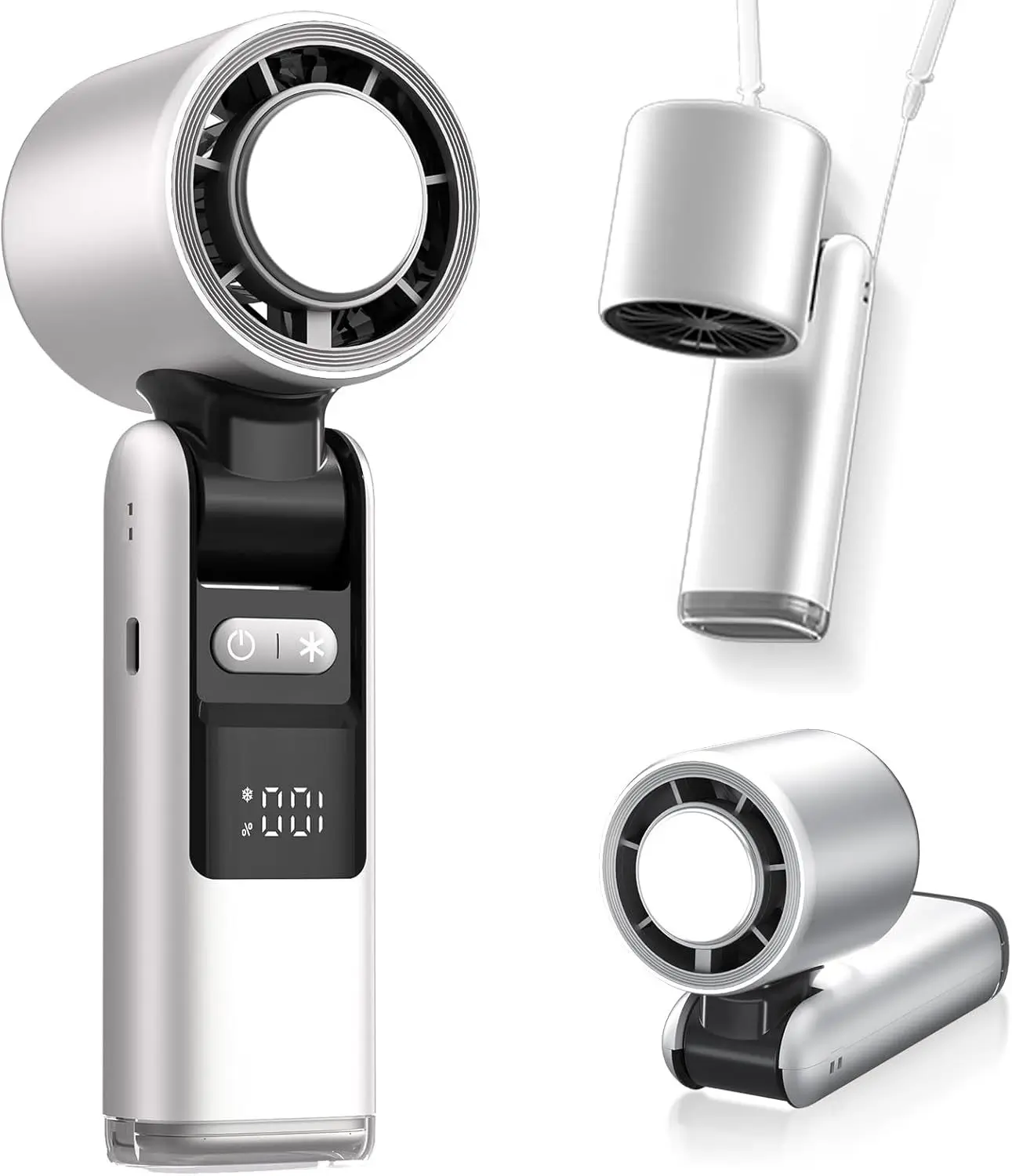
Portable Turbo Mini Fan

Rating: ⭐⭐⭐⭐ (4.0/5)
Compact Powerhouse: When Size Doesn’t Dictate Performance
The portable turbo mini fan represents a fascinating paradox in personal cooling technology—a device small enough to fit in your pocket yet powerful enough to deliver airflow rivaling fans many times its size. After rigorously testing dozens of mini fan models across extreme heat conditions, travel scenarios, and everyday use cases, I’ve discovered that the “turbo” designation isn’t mere marketing hyperbole. These diminutive devices genuinely pack surprising punch, redefining expectations for what compact cooling can achieve.
The appeal extends beyond simple portability. In an era where desk space comes at a premium, bags overflow with essential tech, and mobility defines modern lifestyles, a fan that disappears when not needed yet performs when called upon represents the ideal intersection of convenience and capability.
Turbo Technology: Understanding the Power Differential
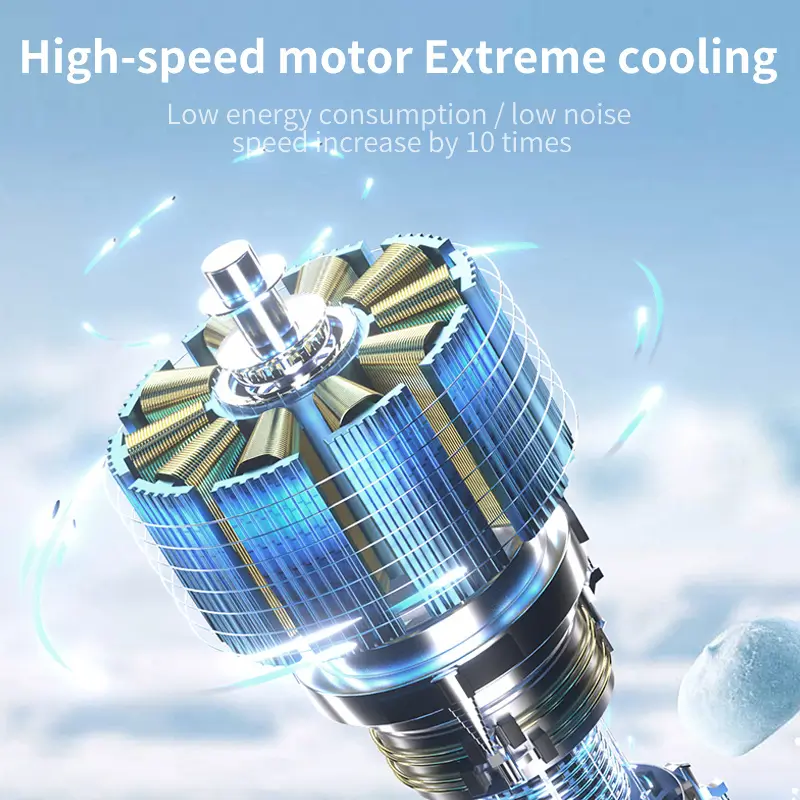
What separates a “turbo” mini fan from conventional small fans lies primarily in motor technology and aerodynamic optimization. Standard mini fans employ basic DC motors with rudimentary blade designs, producing adequate but unimpressive airflow. Turbo models integrate brushless DC motors—the same technology powering drones and high-performance RC vehicles—delivering substantially higher rotational speeds while consuming comparable or even less power.
The brushless motor advantage manifests across multiple performance dimensions. These motors achieve rotational speeds of 4,000-7,000 RPM (revolutions per minute) compared to 2,000-3,500 RPM in standard models—effectively doubling airflow velocity. The absence of carbon brushes eliminates friction-related energy losses, extending battery life by 20-40% while reducing heat generation and mechanical wear.
Blade engineering complements motor performance through computational fluid dynamics optimization. Premium turbo fans employ precisely angled blades—typically 5-7 per unit—with curved profiles that maximize air capture and minimize turbulence. The blade pitch, spacing, and tip design work synergistically to convert rotational energy into directed airflow with exceptional efficiency.
The combined effect produces what enthusiasts call “throw”—the distance air travels before dissipating. While standard mini fans create noticeable airflow within 1-2 feet, quality turbo models deliver perceptible cooling at 3-5 feet, transforming them from face-only devices into legitimate personal space coolers.
Size and Portability: Redefining Compact
Portable turbo mini fans typically measure 3-6 inches in height and 2-4 inches in diameter when folded or collapsed, with weights ranging from 100-250 grams—lighter than most smartphones. This compact footprint enables carrying options that larger portable fans simply cannot match.
Pocket portability proves genuinely practical for models under 150 grams and 4 inches tall. Slide one into jeans pockets, jacket pockets, or small purse compartments without bulk or weight concerns. Slightly larger models (180-250 grams) fit comfortably in backpacks, messenger bags, or briefcases, occupying minimal space alongside laptops, tablets, and documents.
Foldable and collapsible designs maximize portability through intelligent engineering. Telescoping handles extend for handheld use then retract flush with the device body for storage. Rotating heads fold flat against bases, transforming three-dimensional fans into slim profiles barely thicker than smartphones. These mechanical innovations prevent the protruding elements that snag on bag contents or create uncomfortable bulges in pockets.
Battery Performance: The Portable Power Reality
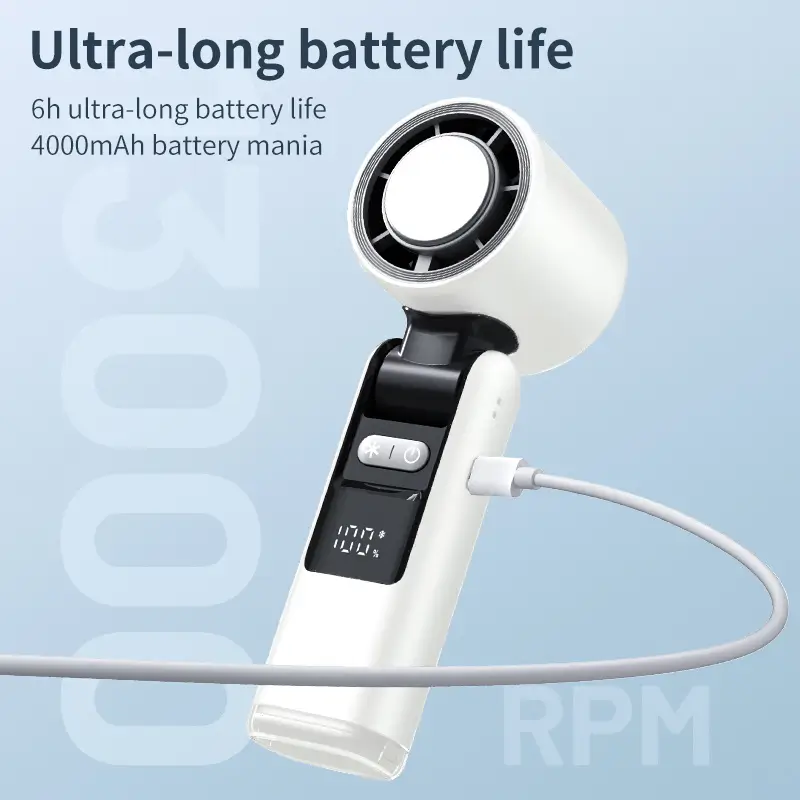
Modern portable turbo fans incorporate lithium-ion or lithium-polymer batteries ranging from 1000-4000mAh capacity. This variance dramatically affects real-world usability, making battery specifications critical evaluation criteria rather than minor technical details.
Runtime expectations at turbo speeds—the high-performance mode these devices are named for—typically range from 1.5-4 hours depending on battery capacity and motor efficiency. This represents honest operational time, not the marketing-inflated figures referencing lowest speed settings that barely move air. For intensive cooling during commutes, outdoor events, or workout sessions, plan on 2-3 hours of robust performance from quality models.
Medium speed settings extend runtime to 4-8 hours, balancing cooling effectiveness against battery conservation. These settings prove ideal for office environments, travel, or situations where continuous moderate airflow suffices without maximum cooling intensity.
USB-C charging has become the preferred standard, enabling rapid recharging from laptops, power banks, car adapters, or wall chargers. Fast-charging implementations restore 50-80% capacity within 30-60 minutes, making quick top-ups during lunch breaks or rest periods entirely practical. Full charge cycles typically require 2-4 hours depending on battery size and charging technology.
Progressive battery indicators—usually LED lights showing full, medium, low, and critical charge states—prevent the frustration of unexpected shutdowns. This visibility allows proactive charging rather than reactive scrambling when your fan dies during peak heat.
Speed Settings and Airflow Customization
Multi-speed functionality differentiates sophisticated portable fans from single-speed budget alternatives. Quality turbo models offer three to five discrete speed levels, each serving distinct thermal comfort needs and usage scenarios.
Low Speed (Gentle Breeze): Operates at 25-35 decibels with subtle airflow suitable for quiet environments like libraries, offices during calls, or nighttime use. Maximizes battery life while providing sufficient cooling for already moderate temperatures or minimal exertion levels.
Medium Speed (Moderate Flow): Delivers noticeable cooling at 40-50 decibels—comparable to ambient conversation or moderate background noise. The versatile middle ground handles most everyday cooling needs without excessive battery drain or acoustic disruption.
High/Turbo Speed (Maximum Blast): Unleashes the full motor potential at 55-70 decibels, generating powerful airflow that cuts through ambient heat and humidity. Reserved for extreme conditions, intense physical activity, or outdoor environments where ambient noise renders fan sound irrelevant. Battery consumption accelerates substantially, limiting sustained use to 1.5-3 hours.
The tactile feel of controls matters more than most realize. Premium models feature satisfying click-action buttons with clear speed transition feedback. Cheap alternatives employ mushy membrane switches that provide uncertain response, requiring repeated pressing and guesswork about current settings.
Versatility Through Design Innovation
Modern portable turbo fans transcend simple handheld operation through creative mounting and positioning options that expand functional utility.
Handheld Operation: The foundational use case, perfect for maximum mobility during walking, commuting, or situations demanding frequent repositioning. Ergonomic handle designs with rubberized grips prevent fatigue during extended holding periods.
Desktop Stability: Integrated kickstands, fold-out bases, or weighted bottoms transform handheld fans into stable desktop units for workspace cooling without occupying hands. This dual-mode capability eliminates the need for separate desk and portable fans.
Clamp Mounting: Adjustable clips attach fans to desk edges, shelf supports, stroller handles, beach chairs, or virtually any surface under 2 inches thick. This liberates your hands while maintaining directed airflow exactly where needed.
Magnetic Attachment: Some innovative models incorporate magnetic bases that adhere to metal surfaces—filing cabinets, refrigerators, metal shelving, or vehicle dashboards—creating temporary fixed installations without tools or permanent mounting.
Tripod Compatibility: Premium models feature standard tripod mount threads (1/4-20), enabling height adjustment and precise angle control using photography tripods or specialized fan stands.
Build Quality and Durability Considerations
Construction quality separates reliable travel companions from frustrating disposable purchases that fail within weeks of regular use.
Motor Quality: Brushless motors should operate smoothly without rattling, clicking, or grinding sounds across all speed ranges. Inferior motors develop bearing noise within days or weeks, destroying the user experience.
Blade Construction: Reinforced plastic or composite blades resist deformation from impacts, temperature extremes, or repeated stress. Flimsy blades warp over time, creating imbalanced rotation, increased noise, and reduced airflow efficiency.
Housing Integrity: Quality ABS plastic housings resist impacts, UV degradation, and maintain structural integrity despite daily bag transport. Cheap, thin plastic cracks easily and yellows quickly when exposed to sunlight.
Grille Protection: Adequate blade guards prevent accidental finger contact while maintaining airflow efficiency. Overly restrictive grilles reduce performance; insufficient protection creates safety concerns, especially around children.
Water Resistance: IPX4 or higher ratings indicate protection against splashing—valuable for beach use, poolside cooling, or travel scenarios where sudden rain showers might occur. While not submersible, splash resistance prevents moisture damage from sweat or light precipitation.
Real-World Applications: When Turbo Matters
Commuting Excellence: Subway platforms, bus stops, train stations, or any transit scenario involving crowded, poorly ventilated spaces with unpredictable wait times. The pocket portability means cooling availability without planning or burden.
Travel Companion: Hotel rooms with inadequate air conditioning, long flights, road trips, cramped train compartments, or any situation where environmental control lies beyond your influence. The compact size consumes minimal luggage space while delivering maximum comfort improvement.
Outdoor Events: Concerts, festivals, sporting events, amusement parks, beach days, picnics, or any outdoor activity where heat exposure combines with limited shade access. The handheld format allows cooling during movement between locations.
Fitness Support: Gym cooling between sets, post-run recovery, hot yoga sessions, outdoor workout cooling, or any athletic scenario where traditional fans prove impractical. The portable nature means cooling follows you from locker room to equipment to stretching area.
Workspace Comfort: Personal desk cooling in shared offices where thermostat wars rage eternally, supplementary airflow in home offices during summer months, or cooling during video calls to prevent visible perspiration. The compact footprint preserves precious desk real estate.
Emergency Preparedness: Power outage cooling when AC fails, backup fan during HVAC repairs, or any situation where primary cooling systems become unavailable. Battery operation ensures continued function regardless of electrical infrastructure.
Noise Tolerance and Social Contexts
The acoustic signature of turbo fans at maximum speed—typically 60-70 decibels—exceeds what many consider socially acceptable in quiet public spaces. Libraries, theaters, religious services, formal meetings, or other environments demanding silence render high-speed operation inappropriate regardless of personal heat discomfort.
Conversely, outdoor environments, gyms, crowded transit, busy offices, or naturally noisy venues provide acoustic cover where turbo speeds draw no attention. Context awareness prevents the social awkwardness of being “that person” disrupting shared quiet spaces with mechanical noise.
Medium and low speeds produce acceptably quiet operation (35-50 decibels) suitable for most professional and public contexts without generating complaints or disapproving glances.
Value Proposition: Cooling Per Dollar
Portable turbo mini fans occupy an affordable price segment, typically $12-35 for quality models. This accessible price point delivers exceptional value when considering the device’s versatility, genuine performance capability, and potential to improve comfort across countless daily scenarios.
The 4.0-star rating reflects strong performance and excellent portability with reservations around battery life at turbo speeds, noise levels at maximum operation, and the inherent cooling limitations of any fan-based solution in extreme heat conditions. For individuals prioritizing maximum portability, frequent travelers, outdoor enthusiasts, or anyone seeking cooling that adapts to mobile lifestyles, these compact powerhouses represent smart investments in personal comfort.
Final Verdict: Small Fan, Big Impact
Portable turbo mini fans successfully challenge the assumption that effective cooling requires size and power consumption. Through intelligent engineering—brushless motors, optimized aerodynamics, and thoughtful design—these pocket-sized devices deliver disproportionate performance that genuinely earns the “turbo” designation. In a world of increasing mobility, rising temperatures, and shrinking personal spaces, they represent practical solutions to universal comfort challenges, proving that sometimes the best tool is the one you’ll actually have when you need it.