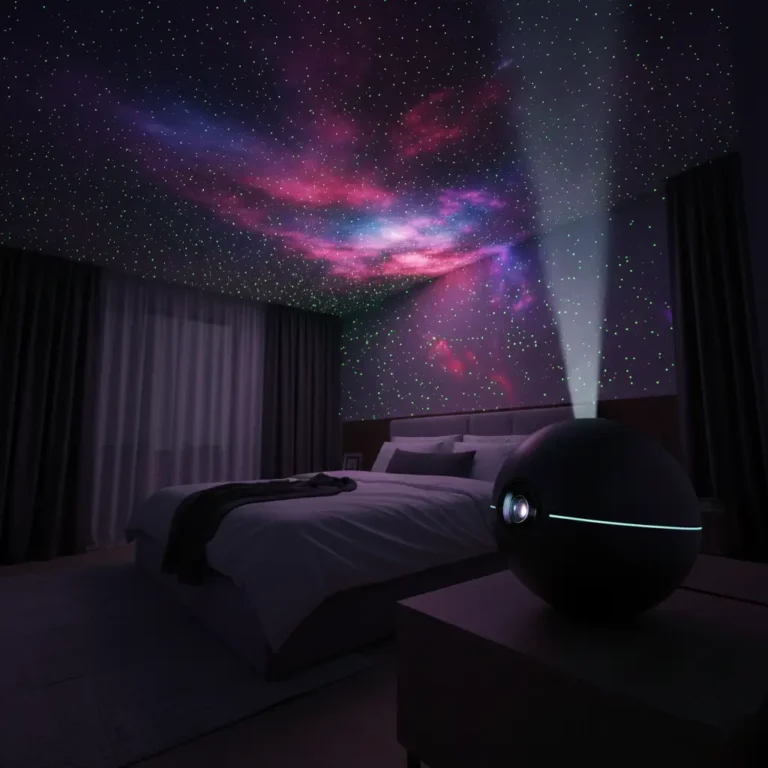
We buy everything we review ourselves — brands don't send us freebies or influence our opinions.
When you shop through our links, we may earn a commission at no extra cost to you. That's what keeps SRVogue honest and running.
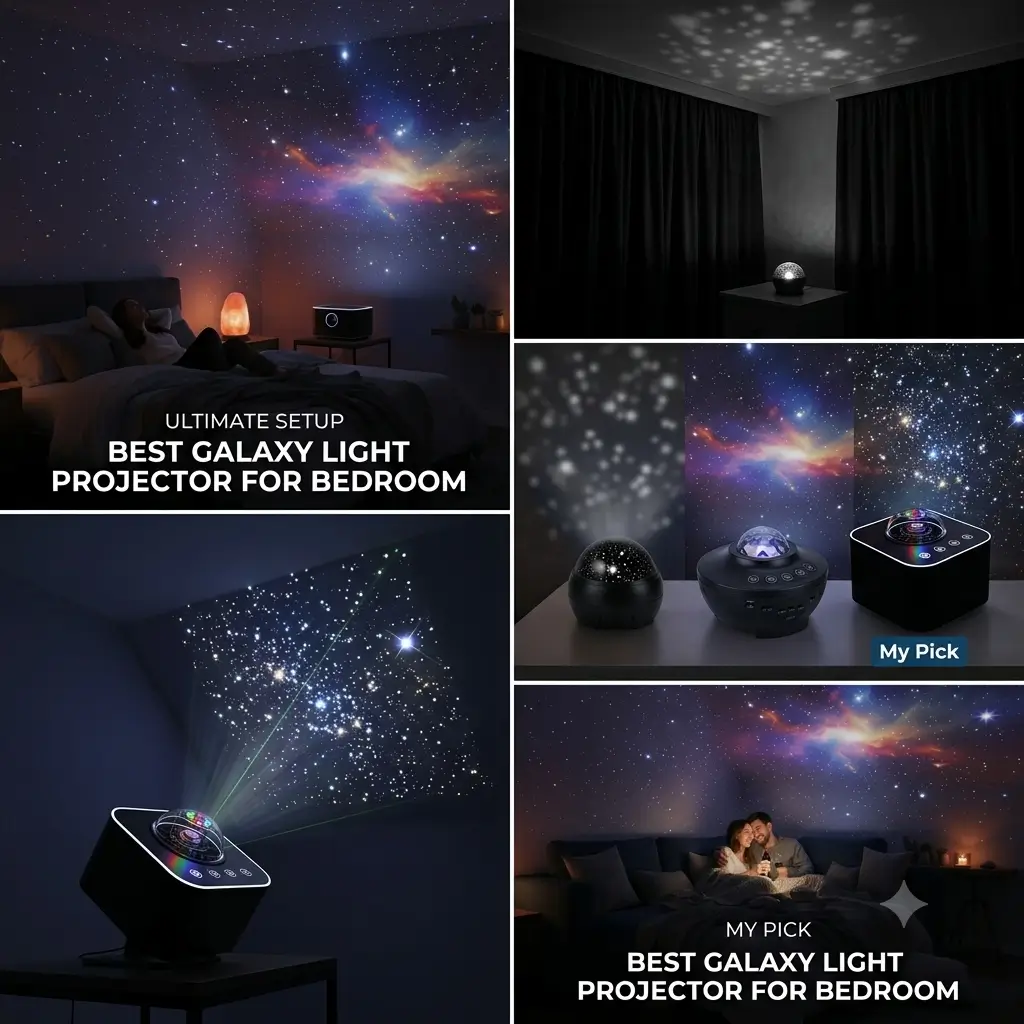
Best Galaxy Light Projector for Bedroom — My Honest Pick After Testing 3

I’ll be honest — I bought my first galaxy projector on a whim at 11pm after seeing one on a reel. No research, no comparison, just clicked “buy” and waited. It arrived, I set it up, and… it was fine. But fine wasn’t what I was hoping for when I wanted my bedroom ceiling to look like an actual night sky.
So I went down a bit of a rabbit hole. Over the past few months I’ve tested three different options to find the best galaxy light projector for bedroom use — not just one that looks cool in photos, but one that actually works in a real room, with real light, for a person who just wants to relax without squinting at a blurry blob on the ceiling.
Here’s everything I found out.
Why I Even Started Looking for the Best Galaxy Light Projector for Bedroom
My bedroom gets zero natural light after 7pm — blackout curtains, no street lamp outside, the whole thing. Perfect sleeping conditions, not-so-great for that ambient vibe I was going for. I didn’t want a lamp that was too bright, but I also didn’t want something that just cast a weak blue tint on the ceiling and called itself a “galaxy.”
I specifically wanted something that could:
- Project a clear, detailed star pattern — not just dots
- Cover most of the ceiling from a small nightstand
- Have some kind of rotation or movement option
- Not sound like a small aircraft taking off
Sounds simple. It wasn’t, at first.
The Three Projectors I Actually Tested
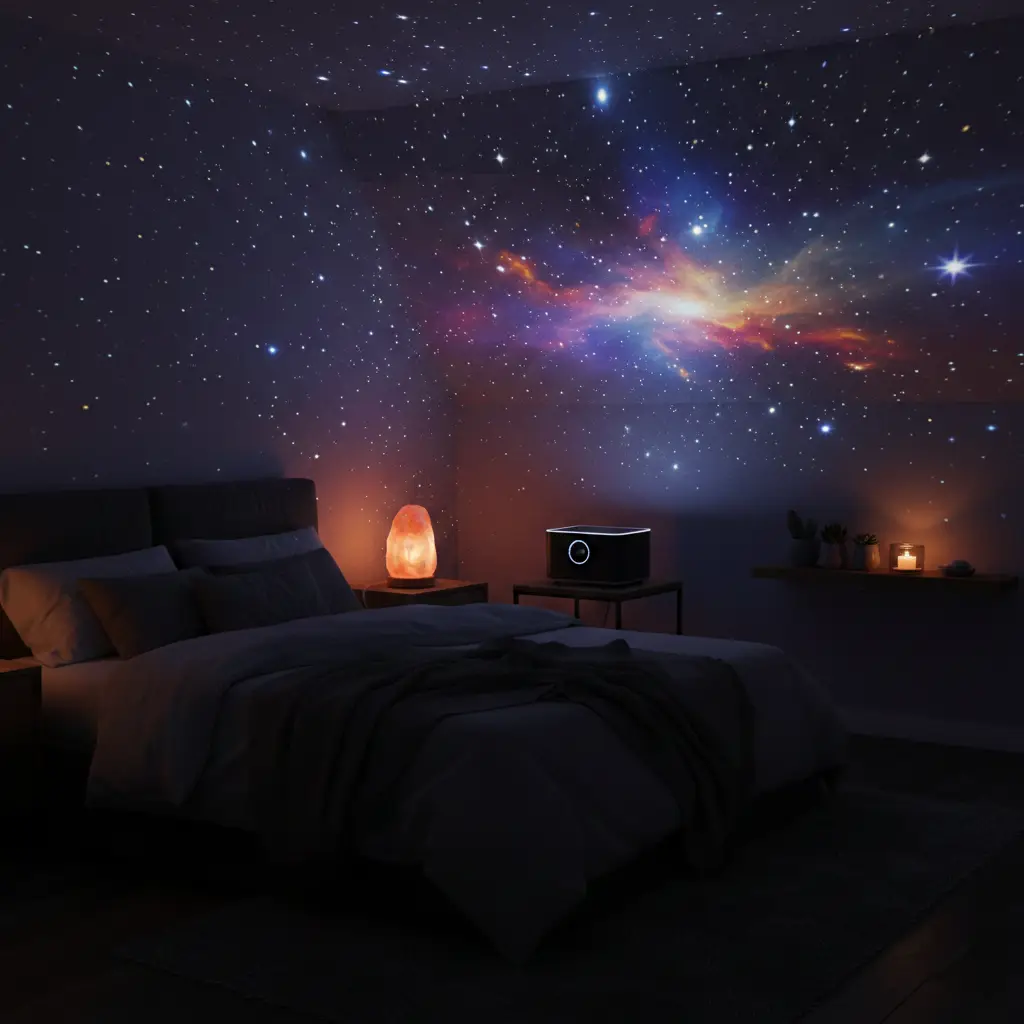
Option 1 — The budget pick (under $20)
I won’t name the exact brand because honestly there are about forty listings that are essentially the same product with different stickers on them. You know the type — star-shaped body, single LED, two or three color modes. I tested one of these for about three weeks.
The projection quality was… okay. From about 5 feet away it covered a decent patch of ceiling, but the stars looked more like smudges than actual points of light. The rotation worked, which I appreciated, but it made a faint humming sound that was slightly annoying in a quiet room. Still, for under $20 I didn’t hate it. If you’re testing the concept before committing to something better, it’ll do the job.
Option 2 — The mid-range galaxy star projector
This one came with a remote, a timer function, and a “nebula cloud” mode that I genuinely loved. The projection covered my entire ceiling from the corner of the room — probably about 12 feet away — and the stars had actual definition. You could see the variation in brightness between different points, which made it feel a lot more realistic.
The nebula mode layered a slow-moving cloud effect behind the stars, and it was honestly one of the more relaxing things I’ve experienced before sleep. My only complaint was the remote — the buttons were tiny and I kept hitting the wrong one in the dark. Small thing, but worth mentioning.
Option 3 — The one I actually kept
This is the one sitting on my nightstand right now. It has a dual laser and LED setup, which means the stars are sharp and the nebula effect comes from a separate light source — so they don’t compete with each other visually. The projection angle is adjustable, which sounds like a minor feature until you’re trying to aim it at a specific part of the ceiling and every other projector you’ve tried has a fixed lens.
It also connects to music — not in a gimmicky way, but the light pulses subtly with whatever’s playing. I had this on during a study session once and it was genuinely nice background stimulation without being distracting.
What Actually Matters When Choosing Galaxy Star Lights for Bedroom
After testing all three, here’s what I think you should actually pay attention to — because the specs on product listings are often misleading.
Projection distance matters more than coverage area. A projector that claims to cover “40 square meters” might technically do that, but if the image is blurry beyond 8 feet, that number means nothing. Check real user photos, not the listing images.
Noise level is underrated. Most listings don’t mention this at all. The budget option I tested had a motor that you could hear clearly in a quiet room. For sleep use, this is a dealbreaker.
Timer function is more useful than you’d think. Falling asleep with a light on and waking up to it still running gets old fast. All three of my picks had a timer, but the settings varied — look for one with at least a 1-hour option.
Remote vs app control. The mid-range option had a physical remote, my final pick had both. App control is more convenient but requires Bluetooth pairing every time, which got slightly annoying. Personal preference, but worth knowing going in.
My Pick for the Best Galaxy Room Light
If I had to point someone toward a single option right now, I’d say go for the mid-to-upper range dual LED and laser projectors — specifically anything with adjustable projection angle, a built-in timer, and a nebula mode that uses a separate light source from the stars.
The best galaxy room light, in my experience, isn’t necessarily the most expensive one. It’s the one that covers your specific ceiling size, runs quietly enough to sleep through, and has enough control options that you can actually customize it to how you use your bedroom.
The under-$20 options aren’t bad for a first experiment. But if you already know you want this for nightly use, skip them and invest a little more upfront.
Final Thoughts — Is a Galaxy Projector Worth It?
Honestly? Yes, more than I expected. I was pretty skeptical going in — it felt like the kind of thing that would be exciting for a week and then just sit on a shelf. That hasn’t happened. I still use mine almost every night, usually during the wind-down portion of my evening before I actually try to sleep.
There’s something genuinely calming about a slow-moving star field on your ceiling. I know that sounds dramatic for what is essentially a small plastic box with some LEDs in it, but here we are.
If you’re looking for the best galaxy light projector for bedroom use and you’re not sure where to start — start with knowing your ceiling distance, decide whether you want nebula effects or just stars, and check that it has a timer. Get those three things right and you won’t go wrong.
Drop a comment if you’ve tried any specific models — I’m always curious what other people are using.