We buy everything we review ourselves — brands don't send us freebies or influence our opinions.
When you shop through our links, we may earn a commission at no extra cost to you. That's what keeps SRVogue honest and running.
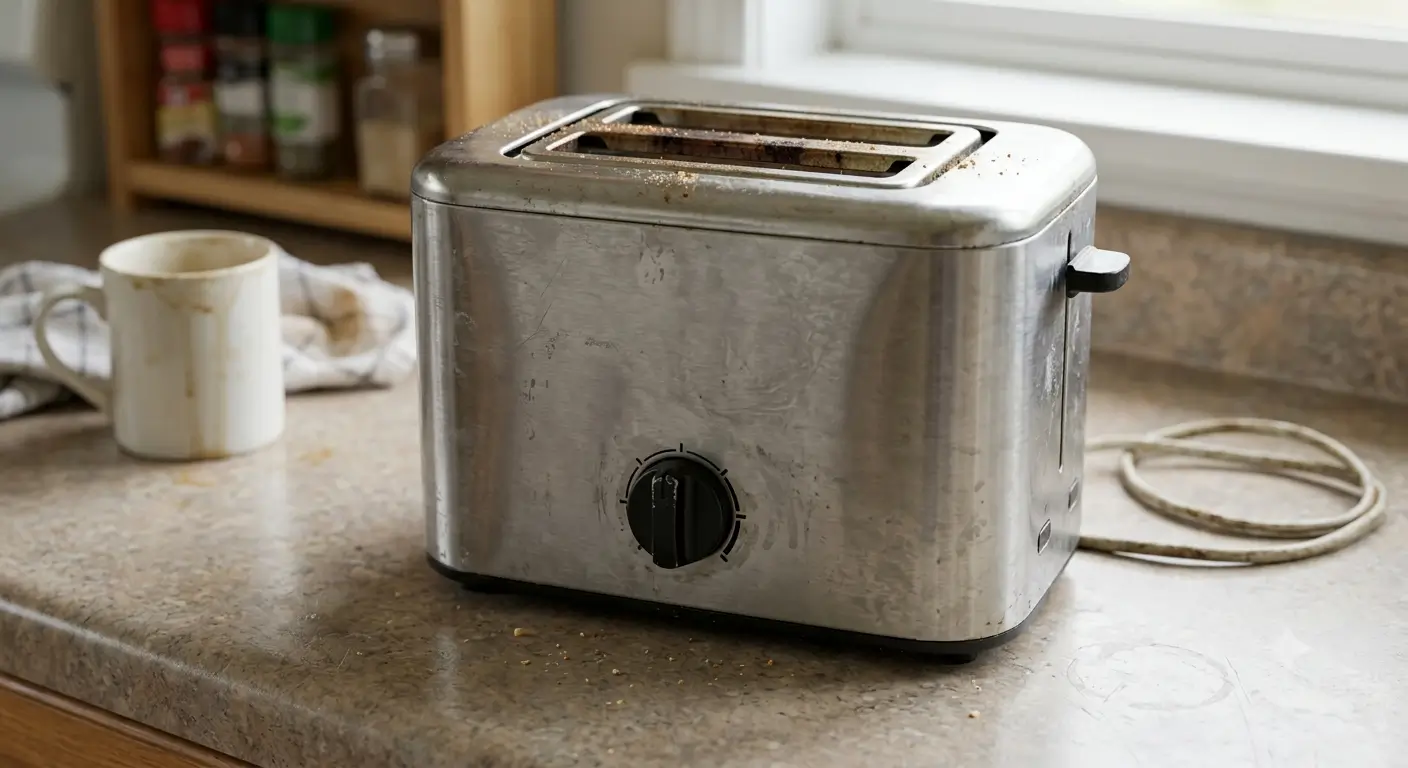
How Long Do Toasters Last? – Guide about Do Stainless Steel toasters

Table of Contents
Introduction
My last toaster lasted almost nine years, which I only realized when I went to replace it and did the math out of curiosity. It didn’t die dramatically, either — it just started toasting unevenly one side over the other, and one day the lever stopped catching properly, and I finally admitted it was time.
That whole experience got me genuinely curious about how long do toasters last on average, because honestly, I’d never thought about it before mine started acting up. Most of us just use a toaster until it stops working, without really tracking its age.
If you’re wondering whether your toaster is on borrowed time, or you’re just curious what a “normal” lifespan looks like, I want to share what I’ve found from my own appliances and some digging into how this stuff actually holds up.
So, How Long Do Toasters Last on Average?
Based on what I’ve experienced and researched, most toasters last somewhere between 5 and 8 years with regular daily use. Some make it to 10 years or beyond, especially if they’re lightly used or well maintained, while cheaper models can start struggling sooner.
Stainless steel toasters don’t necessarily outlast plastic ones just because of the material, which surprised me when I first looked into it. The toaster lifespan really comes down more to internal components — the heating element, the spring mechanism, the wiring — than the outer shell.
However, I will say my stainless steel models have generally felt sturdier and held up better cosmetically over time compared to plastic ones I’ve owned. They don’t yellow or get brittle the way some plastic housings do after a few years near heat.
Therefore, if you’re choosing between materials purely for longevity, steel gives you a slight edge in durability and appearance, even if the internal lifespan is fairly similar either way.
Signs Your Toaster Is on Its Way Out
Mine started doing this around year seven: one side of the bread would come out noticeably darker than the other, even on the same setting. That uneven toasting was actually the first real sign, in hindsight.
Here are the warning signs I’d watch for, based on my own experience and what I’ve noticed with toasters in general:
Uneven browning. If one side consistently toasts darker or lighter than the other, the heating element is likely wearing unevenly.
Slower toasting times. When a cycle that used to take two minutes suddenly takes four, that’s usually a sign of a weakening heating element.
The lever won’t stay down. This is mechanical wear, plain and simple, and it’s a pretty clear signal the internal spring or latch mechanism is failing.
Burning smells that aren’t from crumbs. A burnt smell even after cleaning out the crumb tray can point to an electrical issue, which is genuinely a safety concern, not just an inconvenience.
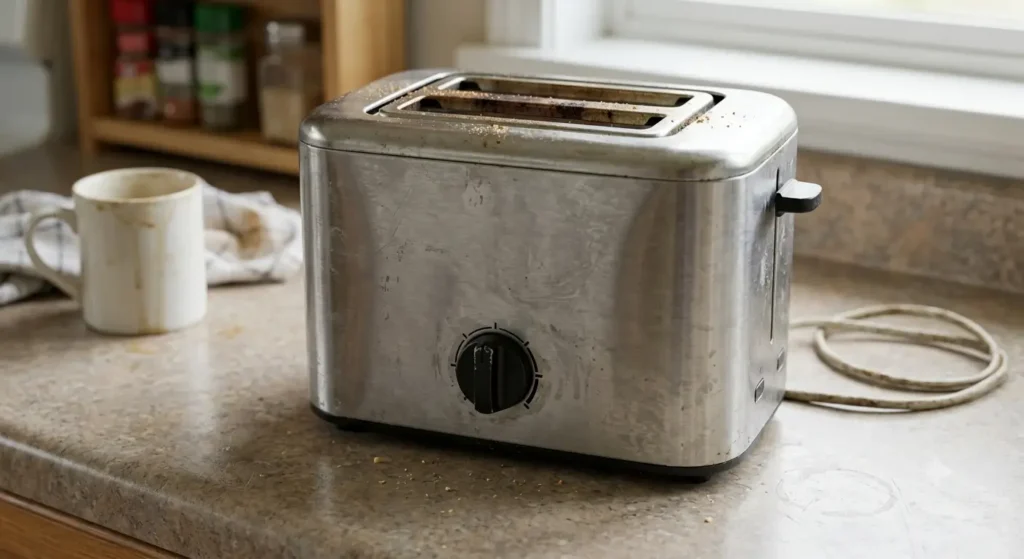
Visible fraying on the cord. This one’s non-negotiable — replace the toaster immediately if you notice this, because it’s a real fire hazard.
Rust or corrosion on internal parts. If you can see this through the slots, it usually means moisture has gotten in over time, and that’s typically not something worth trying to fix.
What Actually Affects How Long Toasters Last
A few factors genuinely make a difference here, based on what I’ve noticed across multiple toasters I’ve owned.
Frequency of use. This one’s obvious, but worth stating: a toaster used once a day lasts longer than one used multiple times daily for a busy household. Mine that lasted nine years was used by just two people, mostly on weekday mornings.
Build quality. Higher-quality models tend to use sturdier internal components, which genuinely does translate into a longer toaster lifespan, even if the toast itself isn’t dramatically better.
Cleaning habits. Crumbs that build up over time can affect performance and, in some cases, create fire risk. I noticed my own toaster ran more smoothly after I started cleaning the crumb tray weekly instead of “whenever I remembered.”
Power source stability. Inconsistent electrical current or frequent power surges can stress the internal components faster than normal use would. A surge protector can help if your home’s wiring is older or unreliable.
How it’s handled physically. Dropping it, banging the lever, or forcing bread that’s too thick into narrow slots all add wear over time that a gentler routine simply avoids.
How to Extend Your Toaster’s Lifespan
I’ve picked up a few habits over the years that seem to genuinely help, based on comparing toasters I babied versus ones I didn’t think twice about.
Clean the crumb tray regularly. I do mine about once a week now, and it’s made a noticeable difference in how evenly my current toaster performs.
Unplug it when not in use for extended periods. This reduces unnecessary electrical exposure, especially if you’re leaving for vacation or won’t use it for a while.
Avoid forcing thick items into narrow slots. If something doesn’t fit easily, it’s putting unnecessary strain on the mechanism every single time.
Keep it away from moisture. Don’t store it near the sink if you can help it, since consistent moisture exposure speeds up internal corrosion.
Don’t use metal utensils to remove stuck food. I know it’s tempting, but this can damage the heating element or create an electrical hazard. Unplug it first if you ever need to dislodge something.
Additionally, [link to related post] has more detail on choosing a toaster built to last in the first place, if you’re shopping for a replacement.
When to Replace a Toaster vs When to Keep Using It
This is genuinely a judgment call, but here’s how I think about it now after going through the decision myself.
If your toaster is showing one or two minor issues — slightly uneven toasting, for example — and it’s otherwise working fine, I’d say keep using it. Minor quirks aren’t necessarily a sign you need to replace a toaster immediately.
However, if you’re seeing safety-related signs like a frayed cord, burning smells unrelated to crumbs, or any sparking, that’s a clear replace-it-now situation, regardless of how old the toaster actually is. Safety issues should never wait for “convenient timing.”
For everything in between, I generally ask myself whether the toaster is still doing its core job reliably. If toasting takes noticeably longer or the results have become genuinely inconsistent, that’s usually my sign that it’s more trouble than it’s worth to keep nursing along.
Conclusion
After going through the lifecycle of more than one toaster myself, my honest takeaway on how long do toasters last is this: expect somewhere around 5 to 8 years for most models, but pay attention to the actual warning signs rather than fixating on a specific number.
A toaster that’s still toasting evenly and safely at year ten doesn’t need replacing just because it’s “old.” One that’s struggling at year three probably does. Trust the performance and safety signs over the calendar.
How old is your current toaster, and have you noticed any of these signs creeping in? I’d love to hear about it in the comments, and check out [link to related post] for help finding a reliable replacement when the time comes.
FAQs
How long do toasters last on average?
Most toasters last between 5 and 8 years with regular use, though some can last 10 years or more with lighter use and good care.
What are the first signs a toaster needs replacing?
Uneven browning and slower toasting times are usually the earliest signs, based on what I’ve experienced and noticed with my own appliances.
Does a stainless steel toaster last longer than a plastic one?
Not necessarily in terms of internal lifespan, but steel tends to hold up better cosmetically and feels sturdier over time.
Is it worth repairing an old toaster instead of replacing it?
Usually not, unless the issue is very minor, since most basic toasters aren’t designed to be repaired and replacement is often more cost-effective.
When should I replace a toaster immediately rather than waiting?
Replace it right away if you notice a frayed cord, burning smells unrelated to crumbs, or sparking — these are safety issues, not just performance ones.
 $3.28
3 SET STAINLESS STEEL FOOD STEAMER
🛒 Buy Now →
affiliate
 $11.50
Household Mini Multi-function Rice Cooker
🛒 Buy Now →
affiliate
 $6.57
Multi-layer Dish Cover Heat Preservation Kitchen Cover Dining Table Leftover Storage Box Transparent Stack Cooking Hood Steamer
🛒 Buy Now →
affiliate
 $3.21
Home Automatic Multifunctional Toaster Four Slot Export
🛒 Buy Now →
affiliate
 $5.97
Portable Electric Fruit Juicer Wireless USB Rechargeable Mini Mixer Multifunction Summer Smoothie Blender Machine Kitchen Supplies
🛒 Buy Now →
affiliate