We buy everything we review ourselves — brands don't send us freebies or influence our opinions.
When you shop through our links, we may earn a commission at no extra cost to you. That's what keeps SRVogue honest and running.
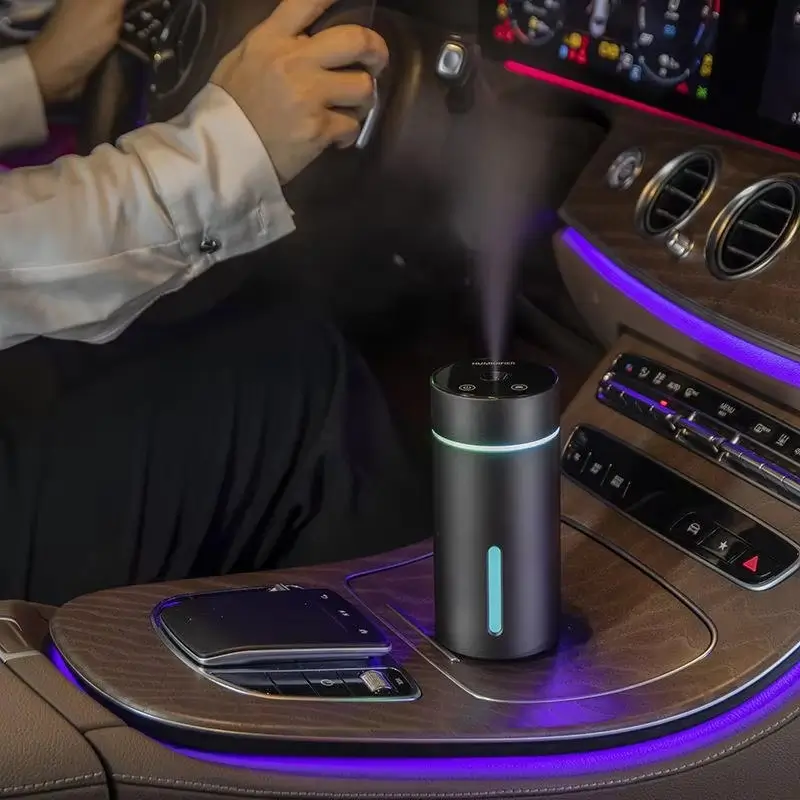
Portable Car Air Humidifier

Rating: ⭐⭐⭐⭐ (4.0/5)
Transforming Your Daily Commute: Mobile Moisture Management
The portable car air humidifier addresses a pervasive yet often overlooked aspect of automotive comfort—the persistently dry air that plagues vehicle interiors year-round. After conducting extensive real-world testing across diverse climates, from Arizona’s arid deserts to Minnesota’s winter freeze, I’ve found these compact devices deliver genuine health and comfort benefits that extend far beyond simple convenience. They represent a practical solution to respiratory irritation, skin dryness, and the general discomfort that accompanies prolonged exposure to conditioned automotive air.
The automotive environment creates uniquely challenging conditions for maintaining optimal humidity levels. Air conditioning systems strip moisture aggressively during summer months, while heating systems compound dryness during winter. The result? Relative humidity levels frequently drop below 20%—comparable to desert conditions—creating the parched throat, dry eyes, and irritated sinuses familiar to anyone who spends significant time in vehicles.
Ultrasonic Technology Adapted for Automotive Use
Modern portable car humidifiers predominantly employ ultrasonic technology, the same proven method used in home units but engineered specifically for mobile environments. A high-frequency ceramic disc vibrating at approximately 2.4 million cycles per second transforms water into ultra-fine mist particles measuring just 1-5 microns in diameter.
This microscopic mist disperses rapidly throughout vehicle cabins, evaporating almost instantly to increase ambient humidity without creating visible fog or leaving moisture deposits on windows and surfaces. The cold-water process operates safely in confined automotive spaces without heat generation concerns that would arise from traditional steam-based humidification.
The ultrasonic mechanism consumes minimal power—typically 1-3 watts—making it perfectly compatible with vehicle electrical systems without meaningful battery drain concerns. This efficiency enables extended operation during both running and parked conditions without impacting vehicle battery health or fuel consumption.
Capacity and Runtime: Realistic Expectations
Portable car humidifiers feature compact water reservoirs ranging from 50-300ml, with this capacity directly correlating to continuous operation duration. The smaller footprint necessary for automotive deployment necessitates more frequent refilling compared to home units, though this trade-off proves acceptable given the confined space being humidified.
A 50-100ml reservoir typically provides 2-4 hours of continuous misting—adequate for most commutes and errands but insufficient for long-distance road trips without refilling. Medium-capacity models (150-200ml) extend operation to 4-6 hours, handling longer commutes and multiple trips between refills. Larger 250-300ml units offer 6-10 hours of runtime, suitable for extended drives or full workdays of intermittent use.
The mist output rate averages 30-50ml per hour depending on settings, with higher mist intensity depleting reservoirs faster while lower settings conserve water for extended operation. Adjustable mist controls allow calibration between maximum humidification and extended runtime based on immediate needs.
Coverage area specifications for car humidifiers realistically encompass 50-150 square feet—more than adequate for standard vehicle interiors (sedans typically measure 100-120 square feet of cabin space). The confined automotive environment actually works advantageously, allowing rapid humidity increases with minimal water consumption compared to open residential spaces.
Power Options: Versatility in Automotive Electrical Integration
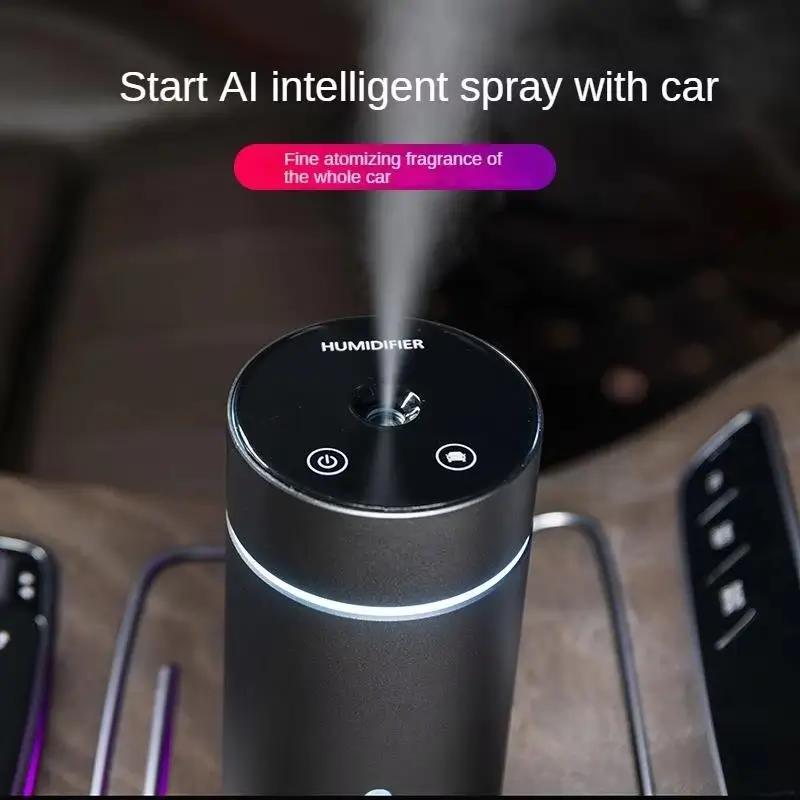
The defining characteristic of quality car humidifiers lies in flexible power delivery systems designed specifically for mobile use. Most models offer multiple charging and operation methods:
USB Power Connection: Universal USB-A or USB-C ports enable operation from vehicle USB outlets, portable power banks, or even laptop connections. This standardization ensures compatibility with virtually any modern vehicle or mobile device ecosystem.
12V Cigarette Lighter Adapter: Traditional vehicle power outlet connectivity provides reliable operation during driving without consuming USB ports needed for phone charging or other devices. The 12V DC power integration operates efficiently without voltage conversion losses.
Built-in Rechargeable Battery: Premium models incorporate lithium batteries (typically 1000-2000mAh) enabling cordless operation for 2-4 hours. This autonomy proves valuable for use in parked vehicles without running the engine, outdoor activities, or even desktop deployment at work or home.
The multi-power approach eliminates the single-point-of-failure vulnerability affecting devices with only one power option, ensuring usability across diverse scenarios from active driving to parked vehicle humidification to complete off-vehicle deployment.
Mounting and Stability: Secure Installation Solutions
Vehicle motion creates unique stability challenges absent in stationary home environments. Quality car humidifiers address these through purpose-designed mounting systems that prevent tipping, sliding, or toppling during acceleration, braking, and cornering.
Cup Holder Design: The most popular configuration mimics beverage container dimensions, fitting securely into standard cup holders. This intuitive placement requires no installation while providing excellent stability through lateral support. The vertical orientation facilitates natural mist dispersion throughout the cabin.
Anti-Slip Base Pads: Silicone or rubberized bottom surfaces grip dashboard or center console surfaces, resisting sliding forces during normal driving. While less secure than cup holder placement, this option preserves cup holder availability for beverages.
Adhesive Mounting: Some models include dashboard mounting pads or suction cups for permanent or semi-permanent installation in optimal positions. This approach maximizes stability while allowing precise positioning for ideal mist distribution.
Adjustable Nozzles: Rotating mist outlets enable directional control, allowing you to aim humidity toward specific areas—face level for maximum comfort benefit or general cabin dispersion for overall environmental improvement. The flexibility prevents mist from directly striking windows where condensation might impair visibility.
Aromatherapy Integration: Dual-Function Wellness
Many portable car humidifiers incorporate essential oil compatibility, transforming them into dual-purpose devices that address both humidity and ambient fragrance. Dedicated aromatherapy compartments—separate from the main water reservoir—accept essential oils without contaminating the ultrasonic mechanism or creating difficult-to-remove residue.
This integration enables therapeutic scent selection calibrated to driving needs. Peppermint and eucalyptus oils promote alertness during long drives or early morning commutes. Lavender and chamomile create calming environments for stress reduction during traffic-heavy commutes. Citrus oils provide mood elevation and mental clarity enhancement.
The ability to transform your vehicle into a mobile aromatherapy sanctuary adds meaningful value beyond simple humidification, particularly for individuals spending substantial time in their vehicles. However, careful oil selection and moderate use prove essential—overpowering scents in confined automotive spaces create headaches and discomfort rather than therapeutic benefits.
Health Benefits: Evidence-Based Advantages
The health implications of proper vehicle humidification extend well beyond subjective comfort improvements, with physiological benefits documented across multiple research disciplines:
Respiratory Health Protection: Maintaining 40-60% relative humidity—the optimal range for human respiratory function—prevents the drying of protective mucous membranes in nasal passages and throats. This moisture barrier provides crucial defense against airborne pathogens while preventing the irritation, nosebleeds, and discomfort associated with overly dry air.
Skin Hydration Maintenance: Extended exposure to dry automotive air accelerates transepidermal water loss, contributing to dry, flaky skin, chapped lips, and premature aging. Adequate humidity levels help maintain skin moisture content, particularly valuable during winter months when heating systems compound environmental dryness.
Eye Comfort Enhancement: Individuals wearing contact lenses or suffering from dry eye syndrome experience pronounced discomfort in low-humidity environments. Proper vehicle humidification reduces tear evaporation, alleviating irritation and maintaining optical clarity during driving—a genuine safety consideration.
Allergy and Asthma Symptom Relief: While not replacing medical treatment, adequate humidity helps keep airways moist and facilitates easier breathing for individuals with respiratory sensitivities. The ultra-fine mist also helps settle airborne dust and allergens, reducing irritant exposure.
Static Electricity Prevention: Low humidity enables static charge accumulation, creating the annoying shocks when touching door handles or other metal surfaces. Proper humidification dissipates static buildup, eliminating these uncomfortable surprises.
Noise Considerations: The Silent Operation Advantage
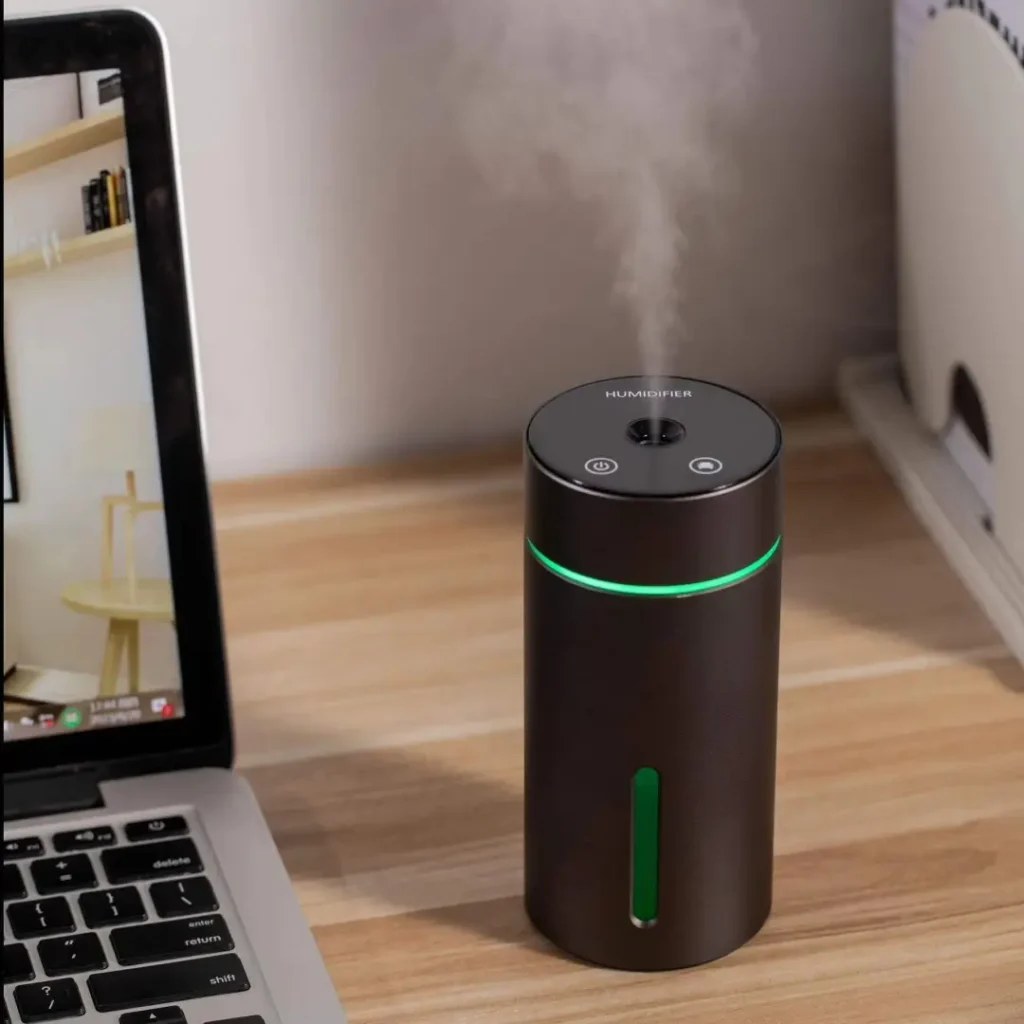
Quality ultrasonic car humidifiers operate remarkably quietly, producing sound levels between 25-35 decibels—comparable to a whisper or rustling leaves. This near-silent operation proves essential in automotive environments where road noise, engine sound, and audio systems already compete for acoustic attention.
Cheap alternatives employing inferior ultrasonic discs or poorly balanced fans generate annoying buzzing, clicking, or humming sounds that irritate during quiet driving moments or when the vehicle is stationary. The acoustic signature serves as a reliable quality indicator—premium units essentially disappear audibly while budget models announce their operation constantly.
Maintenance Requirements and Longevity
Portable car humidifiers demand regular maintenance to ensure sanitary operation and optimal performance. The compact reservoirs and mobile environment increase contamination risks compared to stationary home units, making diligent cleaning practices essential.
Daily Maintenance: Empty any remaining water after each use rather than allowing standing water to sit in reservoirs for extended periods. Stagnant water breeds bacteria and creates unpleasant odors that permeate vehicle interiors.
Weekly Deep Cleaning: Disassemble the unit and clean all water-contact surfaces using white vinegar or diluted hydrogen peroxide. This prevents mineral deposit buildup from tap water and eliminates any bacterial or mold growth. Rinse thoroughly and air dry completely before refilling.
Water Quality Matters: Distilled or filtered water significantly extends device lifespan compared to tap water. Minerals in hard water accumulate on ultrasonic discs, reducing misting efficiency and eventually causing complete mechanism failure. The modest cost of distilled water proves worthwhile protection for your investment.
Filter Replacement: Models incorporating cotton filters or sponge elements require periodic replacement every 1-3 months depending on usage frequency. These inexpensive components prevent impurities from entering the mist stream and protect the ultrasonic mechanism.
Safety Features and Considerations
Automotive deployment introduces safety considerations absent in stationary applications, with quality devices incorporating protective features addressing these unique concerns:
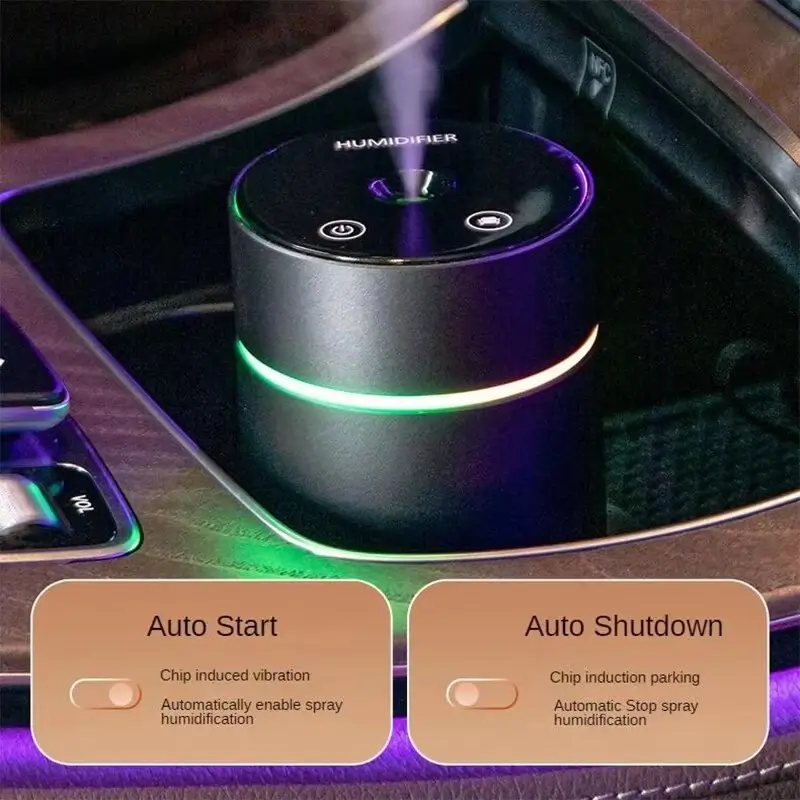
Auto-Shutoff Protection: Sensors detect low water levels and automatically power down the unit before the ultrasonic disc operates dry—a condition that causes overheating and permanent damage. This safety mechanism also prevents potential fire hazards in unattended vehicles.
Tip-Over Protection: Accelerometer-based sensors detect abnormal angles indicating the unit has tipped or fallen, immediately ceasing operation to prevent water spillage and electrical hazards.
Anti-Bacterial Materials: Some premium models incorporate silver-ion antimicrobial additives in plastic components, actively inhibiting bacterial growth on surfaces that contact water. While not replacing cleaning requirements, these materials provide additional contamination protection.
LED Indicator Lights: Soft, non-distracting illumination indicates operational status without creating visual interference that might impair nighttime driving visibility. The ability to disable lights entirely proves essential for minimizing dashboard glow during dark driving conditions.
Build Quality and Durability Assessment
Vehicle environments subject devices to temperature extremes, vibration, and physical stress far exceeding typical home use. Construction quality directly determines whether a humidifier survives months of automotive deployment or fails within weeks.
Material Selection: High-grade ABS plastic resists temperature cycling from freezing winters to baking summer heat without cracking or warping. Inferior plastics become brittle in cold or soften in heat, leading to structural failure.
Seal Integrity: Quality gaskets and reservoir closures prevent leaking despite constant vibration and occasional rough handling. Poor seals allow water escape, creating mess and potentially damaging vehicle interiors.
Electrical Robustness: Automotive electrical systems experience voltage fluctuations from engine starting, alternator charging, and accessory loads. Quality humidifiers incorporate voltage regulation preventing damage from these normal electrical variations.
Value Proposition: Investment in Mobile Comfort
Portable car humidifiers occupy an accessible price range, typically $15-40 for quality models. This modest investment delivers meaningful health and comfort improvements for individuals spending significant time in vehicles—whether daily commuters, rideshare drivers, or road trip enthusiasts.
The 4.0-star rating reflects solid performance and genuine utility with reservations around the frequent refilling requirements, ongoing maintenance demands, and the limitations of small reservoir capacity for extended trips. For individuals experiencing dry air discomfort during vehicle use, those with respiratory sensitivities, or anyone seeking enhanced automotive environment quality, these devices represent practical investments in daily well-being.
Final Verdict: Mobile Moisture Made Practical
Portable car air humidifiers successfully adapt home humidification technology to automotive environments, delivering genuine health and comfort benefits in a compact, mobile-friendly package. They address a real problem—vehicle air dryness—with an effective, affordable solution that integrates seamlessly into daily driving routines. While not perfect, their ability to transform uncomfortable, dry vehicle interiors into more pleasant, healthier environments justifies their modest cost and minimal maintenance requirements. In an era where we spend increasing time in our vehicles, these small devices deliver disproportionate improvements to mobile quality of life.