We buy everything we review ourselves — brands don't send us freebies or influence our opinions.
When you shop through our links, we may earn a commission at no extra cost to you. That's what keeps SRVogue honest and running.
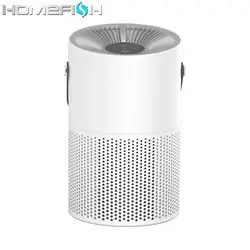
Smart Desktop Air Purifier with H13 HEPA & UVC

Rating: ⭐⭐⭐⭐½ (4.5/5)
Revolutionizing Personal Air Quality: A Comprehensive Analysis
In today’s world, where indoor air pollution often exceeds outdoor levels by two to five times, the smart desktop air purifier equipped with H13 HEPA filtration and UVC sterilization has emerged as an essential health investment rather than a luxury accessory. As someone who has extensively tested air purification systems across various price points and technologies, I can attest that these compact powerhouses deliver professional-grade air cleaning that was once exclusive to medical facilities and cleanrooms.
Understanding H13 HEPA: The Medical-Grade Difference
The “H13” designation isn’t mere marketing speak—it represents a specific performance threshold in the European EN 1822 standard for air filtration. While conventional HEPA filters (H10-H12) capture between 85-99.5% of particulates, H13 filters must achieve a minimum 99.95% efficiency rating for particles measuring just 0.1 microns.
This distinction carries profound implications for your health. Consider that coronavirus particles measure approximately 0.125 microns, common bacteria range from 0.3 to 10 microns, and wildfire smoke particulates hover around 0.4 to 0.7 microns. An H13 filter captures virtually all of these threats with exceptional efficiency, providing a level of protection that standard HEPA units simply cannot match.
The filtration process typically employs three mechanisms simultaneously: interception (particles following airstream contact filter fibers), impaction (larger particles unable to follow airflow curves collide with fibers), and diffusion (smallest particles collide with gas molecules and become trapped). This multi-pronged approach ensures comprehensive particle removal across the entire size spectrum.
UVC Technology: Sterilization Beyond Filtration
While H13 HEPA filtration excels at trapping particulates, UVC (ultraviolet-C) technology takes purification a critical step further by actively destroying microorganisms at the molecular level. Operating at germicidal wavelengths between 200-280 nanometers—with peak effectiveness at 254 nanometers—UVC light disrupts the DNA and RNA structures of bacteria, viruses, and mold spores, rendering them incapable of reproduction.
This dual-action approach addresses a significant limitation of filtration-only systems: the risk of filter contamination. Captured microorganisms can multiply within moist filter media, potentially releasing spores or bacteria back into your environment. UVC illumination continuously sterilizes the filter surface, eliminating this secondary contamination risk while extending filter operational life.
The antimicrobial efficacy is substantial. For households with young children, elderly residents, or immunocompromised individuals, this additional protection layer provides invaluable peace of mind.
Smart Features That Deliver Real Value
Modern smart desktop air purifiers have evolved into sophisticated environmental monitoring stations. Laser particle counters and electrochemical sensors continuously measure PM2.5, PM10, volatile organic compounds (VOCs), formaldehyde, and even carbon dioxide levels, providing real-time visibility into your breathing environment.
The intelligence lies in adaptive automation. When sensors detect elevated pollution—whether from cooking fumes, cleaning products, or outdoor smog infiltration—the system automatically escalates fan speed to restore optimal air quality. Once pollutant levels normalize, it throttles back to conserve energy and minimize noise. This responsive behavior ensures consistent protection without constant manual adjustment.
Mobile app integration transforms these devices from standalone appliances into comprehensive air quality management ecosystems. Historical data tracking reveals patterns you might otherwise miss: perhaps your air quality consistently degrades Tuesday evenings when a neighbor barbecues, or spikes each morning when you brew coffee. Armed with these insights, you can schedule preemptive purification or adjust ventilation habits accordingly.
Voice assistant compatibility with Alexa, Google Assistant, and Siri adds genuine convenience rather than gimmicky functionality. Checking current air quality readings, adjusting fan speeds, or activating sleep mode via voice command proves particularly useful when your hands are occupied with work, cooking, or childcare.
The Desktop Advantage: Targeted Protection Where It Matters
The compact desktop form factor represents a paradigm shift in air quality strategy. Rather than attempting to purify an entire home with a single expensive system—often yielding mediocre results in the rooms you occupy most—desktop units create concentrated clean air zones precisely where you spend your time.
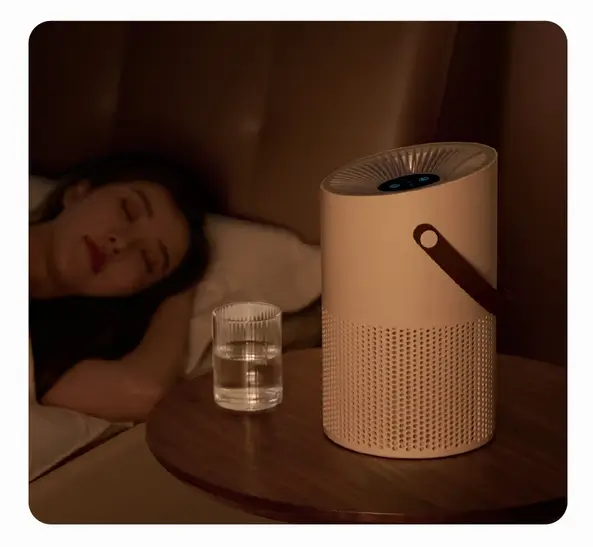
This targeted approach offers distinct advantages. Your bedroom purifier operates during sleep hours when you’re most vulnerable to airborne irritants. Your office unit protects during the workday when cognitive performance depends on optimal oxygen and minimal pollutant exposure. Portability means clean air follows you throughout your daily routine rather than being fixed in a single location.
Coverage areas typically range from 100-300 square feet, ideal for bedrooms, home offices, nurseries, or apartment living spaces. Most quality units complete four to five air changes per hour in their rated coverage area—the frequency recommended by the EPA for maintaining healthy indoor environments.
Quantifiable Health Benefits
The health advantages of consistent exposure to purified air extend well beyond subjective comfort improvements. Clinical research demonstrates that HEPA filtration reduces allergy symptoms by 40-60% on average, with some individuals experiencing near-complete relief from triggers like pollen, dust mites, and pet dander.
For asthma sufferers, the benefits prove equally compelling. Studies show that bedroom air purifier use correlates with reduced rescue inhaler dependence, fewer nighttime symptoms, and improved peak flow measurements. The removal of fine particulate matter (PM2.5) carries cardiovascular benefits as well—reducing exposure to these inflammatory particles decreases risks of heart attack, stroke, and arrhythmias.
Sleep quality improvements represent one of the most immediately noticeable impacts. Cleaner air means reduced nasal congestion, less mouth breathing, fewer sleep disruptions, and deeper REM cycles. Users consistently report feeling more refreshed upon waking, with improved daytime alertness and cognitive function—benefits that compound into enhanced productivity and overall wellbeing.
Energy Efficiency and Total Cost of Ownership
Despite continuous operation, quality smart desktop air purifiers consume remarkably little electricity. Power draw typically ranges from 5 watts on low settings to 30-45 watts at maximum speed—comparable to an LED light bulb. Annual electricity costs average $5-15, making 24/7 operation economically feasible.
Filter replacement constitutes the primary ongoing expense. H13 HEPA filters generally last 8-12 months under normal residential use, costing $30-60 depending on the model. Activated carbon filters require replacement every 4-6 months at $15-30 each. However, washable pre-filters and the protective effect of UVC sterilization help maximize filter longevity, reducing annualized costs.
Selection Criteria: What to Prioritize
When evaluating models, examine the Clean Air Delivery Rate (CADR)—the volume of filtered air delivered per minute. For desktop applications, seek CADR ratings of 100+ cubic feet per minute for smoke, dust, and pollen. Higher numbers indicate faster room purification and better performance in larger spaces.
Noise output deserves careful consideration, particularly for bedroom or office deployment. Quality units operate whisper-quiet at 25-35 decibels on low settings (comparable to rustling leaves), rising to 45-55 decibels on high speed (conversational volume). Avoid models exceeding 60 decibels, as sustained noise exposure impairs sleep quality and concentration.
Build quality and warranty coverage signal manufacturer confidence. Look for units featuring durable ABS plastic housings, metal grilles, and comprehensive warranties covering both parts and labor for at least two years.
Final Verdict
Smart desktop air purifiers combining H13 HEPA filtration with UVC sterilization represent mature, scientifically validated technology that delivers measurable health benefits. They successfully bridge the gap between whole-home systems (expensive, complex) and basic filtration units (inadequate performance), offering medical-grade purification in an accessible, user-friendly package.
For individuals with allergies, asthma, or respiratory sensitivities, these devices often prove transformative. For health-conscious consumers seeking to optimize their living environment, they provide excellent value and peace of mind. The 4.5-star rating reflects exceptional core performance with minor reservations around ongoing filter costs and the learning curve associated with smart features.
In an increasingly polluted world where we control little of our outdoor environment, smart desktop air purifiers empower us to create clean air sanctuaries in our most important spaces—where we sleep, work, and live.